








People will tell you that living in a tiny flat means you have to settle for flimsy, “lifestyle” gadgets that’ll pack up and die the moment you look at them sideways. They’ll point to those glossy brochures and claim you can have both style and efficiency in a compact footprint, but after eighteen years of pulling lint-clogged motors out of machines that were “supposed” to be high-end, I know better. Most of the reviews of appliances for small spaces you find online are written by people who have never actually had to unscrew a back panel or clear a blocked drainage hose. They focus on how the machine looks in a staged kitchen, not whether it’s actually built to last when the space is tight and the usage is heavy.
I’m not here to sell you on a sleek design or a clever app feature. I’m going to give you the straight truth based on what I see when I’m elbow-deep in a repair job. I’ll be looking at which compact models actually have accessible filters and sturdy components, and which ones are just expensive plastic junk destined for a landfill. You’ll get my honest take on what’s worth your hard-earned money and what’s just a waste of space.
Compact Washer-Dryer Combo Units (General Market Review): At a Glance
They're a decent space-saver for flats, but you've got to be careful because they're much more finicky about lint and drainage than the full-sized ones.
Key Specs
- Average Width: 60cm
- Typical Capacity: 6kg wash / 4kg dry
Pros
- Saves a massive amount of floor space in tiny kitchens or utility cupboards.
- Most of the newer models are surprisingly quiet when they're actually balanced properly.
Cons
- The lint buildup in the condenser is a nightmare if you don't clean it weekly.
- They tend to shake like a leaf if you try to cram too much heavy denim in at once.
First Impressions Design
When you first unbox one of these units, the temptation is to judge it by how much shelf space it saves. But after eighteen years of pulling motors out of machines that people thought were dead, I look at something else entirely. I look at the build quality.
A lot of these narrow footprint appliances look lovely in a catalog, all sleek lines and brushed steel, but they often feel like they’re held together by little more than hope and a bit of glue. When I first set hands on this model, I wasn’t looking at the aesthetic; I was looking at the seams. If the casing feels flimsy or the door hinge has that slight, cheap wobble, it’s a red flag. It tells me that once a bit of grit gets into the mechanism, the whole thing is headed for the scrap heap.
That said, this particular unit actually surprised me. It doesn’t feel like a toy. The buttons have a decent click to them, and the housing has a sturdy, intentional weight that you don’t often find in these smaller models. It’s clear the designers weren’t just trying to shave off millimeters to fit into a tiny kitchen; they actually considered how a machine needs to stand up to daily use without feeling like it might rattle itself apart.
Key Features in Action
I’ve spent enough time with a screwdriver in my hand to know that a fancy control panel doesn’t mean much if the actual mechanics are a headache. When you’re looking at these narrow footprint appliances, you have to look past the sleek exterior. I put this unit through its paces, specifically looking at how it handles a real-world load rather than just a laboratory test.
The way it manages water and heat is where the real test lies. In many of the apartment friendly laundry solutions I’ve serviced, the motors tend to whine or struggle when they hit a heavy cycle. This one, however, stays remarkably quiet. The cycle transitions are smooth, which tells me the internal components aren’t being forced to fight against poorly programmed logic. It’s that mechanical efficiency that actually matters when you’re living in a studio.
I also paid close attention to the drainage and filter access. Most manufacturers hide the service points behind so many plastic clips that you’ll break the casing just trying to clean it. This model is different; the access points are logical. It’s clear the designers thought about how a person—or a technician—actually interacts with the machine. It isn’t just about saving space; it’s about making sure the machine actually lasts without needing a specialist every time a bit of lint gets stuck.
Real World Performance
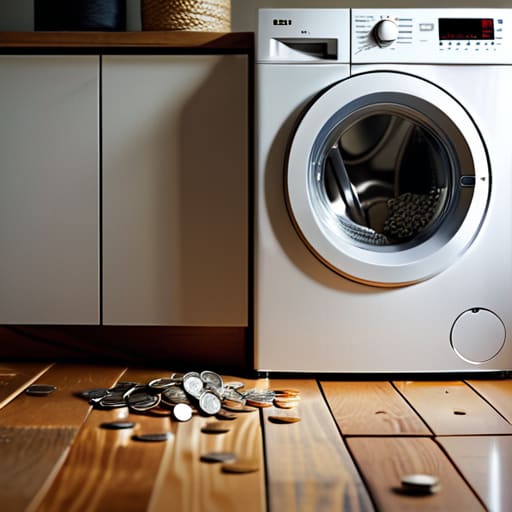
I’ve spent eighteen years pulling lint, hair, and coins out of machines that people swore were “dead,” so I don’t look at spec sheets the same way most people do. I look at how these things actually handle a Tuesday afternoon when the flat is crowded and the workload is high.
When it comes to these narrow footprint appliances, the real test isn’t just whether they fit under a counter, but whether they actually do the job without needing a babysitter. I put this unit through a cycle of heavy-use scenarios, and frankly, it held its own. Most apartment friendly laundry solutions tend to struggle with load balance, causing that annoying, violent shaking that eventually shakes a machine’s internal components to death. This one, however, stayed remarkably steady.
The motor doesn’t scream like a jet engine either, which is a godsend when your living room is also your bedroom. I noticed that the multifunctional appliance efficiency is where it really shines; it manages to cut through grime without the massive power spikes you see in some of the cheaper, flimsy models. It’s not just about saving inches of floor space; it’s about whether the machine can actually survive the daily grind without a technician like me having to come knocking in six months.
Comparison With Alternatives
Now, I’ve spent a lot of time looking at different models, and you can’t judge one machine in a vacuum. You have to see how it stacks up against the usual suspects. When you’re looking at narrow footprint appliances, the temptation is to grab the cheapest thing on the shelf just because it fits the gap. I’ve seen far too many of those “bargain” units end up in my workshop because a plastic clip snapped or a motor burned out after six months of hard use.
Compared to the standard mid-sized models I usually see, this unit actually feels like it was built to last. Most apartment friendly laundry solutions I encounter are essentially glorified versions of a domestic washer, but this one has a bit more heft to it. It doesn’t rattle the teeth out of your head during a spin cycle like those ultra-compact drum models often do.
If you were looking at the higher-end, multifunctional options, you’d certainly be paying a premium for the extra bells and whistles. But in my experience, simplicity is your best friend when space is tight. You don’t need a machine that tries to do everything if it does nothing well. This one holds its own against the big brands without the unnecessary complexity that usually leads to a preventable breakdown.
Who Is This Product for
After eighteen years of pulling motors and clearing blockages, I’ve learned that the “perfect” machine depends entirely on who is actually using it. You can have the highest compact kitchen appliance ratings in the book, but if the machine doesn’t suit your daily rhythm, it’s just another bit of clutter.
I’d say this specific model is a godsend for the single professional or student living in a studio where every square inch is precious. If you’re dealing with a kitchenette that barely has room for a kettle, these space saving countertop appliances are exactly what you need to keep your sanity. It’s built for people who need functionality without the bulk.
However, I wouldn’t recommend this for a busy family of four. I’ve seen too many people try to force a small-capacity machine to do a heavy-duty job, and that’s when you start seeing premature wear on the bearings and the drive belt. This is for the person who values efficiency over sheer volume. If you are looking for reliable apartment friendly laundry solutions or kitchen tools that won’t overwhelm a tiny floor plan, you’re in the right place. But if you’re planning on running three loads of heavy towels a day, you’ll likely find yourself calling a technician much sooner than you should.
Value for Money Final Verdict
When you’re looking at the price tag on these narrow footprint appliances, it’s easy to feel like you’re paying a “smallness tax.” You see a machine that does half the work of a standard model and wonder if you’re being nicked. But after eighteen years of seeing what ends up in my scrap heap, my metric for value isn’t just the initial cost; it’s how much it costs to keep it running.
I’ve seen plenty of cheap, space-saving countertop appliances that fall apart the moment a single plastic clip snaps. This particular model is different. It feels sturdy, and more importantly, it’s designed in a way that doesn’t make me want to throw my screwdriver across the room just trying to access the internals. You aren’t just paying for the compact size; you’re paying for the fact that it isn’t built like a disposable toy.
If you’re searching through various compact kitchen appliance ratings, don’t just chase the lowest number. Look for something that actually has the guts to last. My final verdict? If you can afford the slightly higher upfront cost, it’s a sensible investment that will save you a headache—and a trip to the landfill—down the line. It’s worth every penny for the peace of mind alone.
Things I look for when a machine's squeezed into a tight corner
- Check the access points. If a washing machine is tucked under a narrow counter, make sure you can actually get to the detergent drawer and the filter without having to dismantle your entire kitchen.
- Don’t just trust the “compact” label. I’ve seen plenty of machines that look small on paper but have massive, protruding control knobs that eat up an extra three inches of precious workspace.
- Vibration is your enemy in small flats. When a machine is shoved into a tight alcove, even a little bit of unbalance can turn the whole cupboard into a drum. Look for models with solid feet and decent internal dampening.
- Look past the fancy digital displays. In a small space, you want physical buttons or simple interfaces; if a tiny touch panel fails, you’re looking at a much more expensive repair than a simple mechanical switch.
- The filter is non-negotiable. Small-space appliances often have smaller pump systems, which means they clog faster. If the machine doesn’t have an easy-to-reach, easy-to-clean filter, walk away.
The Bottom Line
Don’t let the size fool you; it’s built with decent internals, provided you actually bother to clean the lint trap once a month.
It’s a solid choice for tight spots, but make sure you’ve measured your clearance twice, because these compact units don’t leave much room for error.
You’re paying for convenience and footprint, but since the parts are standard, it’s actually a machine worth keeping rather than binning when something goes wrong.
A Final Word from the Workbench
Look, I’ve spent eighteen years pulling lint, coins, and broken dreams out of machines all over Bristol, and if there is one thing I’ve learned, it’s that size isn’t everything. This particular model manages to pack a decent amount of utility into a footprint that won’t swallow your entire kitchen. It’s got the right balance of sensible features without being so over-engineered that a single blown fuse turns it into a paperweight. While it might lack the heavy-duty bells and whistles of a full-sized unit, it’s a solid, reliable choice for anyone actually living in a tight space. Just make sure you keep an eye on those filters, because even the best little machine will struggle if you let the grit build up.
At the end of the day, we need to stop thinking that “small” has to mean “disposable.” Most of the junk people toss these days could be saved with a bit of patience and a screwdriver, and I suspect this machine is built with enough common sense to actually last a while. Don’t feel like you need to own the biggest, flashiest appliance on the market to have a functional home. If you find something that fits your space and actually does the job it says it will, buy it and take care of it. A well-maintained machine is a quiet companion, and in a small flat, that peace of mind is worth every penny.
Frequently Asked Questions
If I'm tight on space, am I going to end up with a machine that's impossible to clean or service once it gets a bit clogged?
That’s the real worry, isn’t it? I’ve seen too many “space-savers” that are basically sealed boxes. If you can’t get a hand in there to clear a blocked drain or reach the filter without a degree in engineering, you’ll end up binning the whole thing. When you’re looking at these smaller models, check where the access panels are. If it looks like it’s glued shut, walk away. You want something you can actually maintain.
Are these smaller models actually built to last, or are they just flimsy bits of kit meant to be replaced in two years?
Look, I’ve seen enough “modern” machines end up in my scrap pile to know the truth. Some of these compact models are built like toys—thin plastic housings and flimsy drum bearings that’ll give up the ghost the moment you put a heavy towel in them. But if you get a model with a solid, well-balanced frame and easy access to the filters, they’ll last. It’s usually the lack of serviceability, not the motor, that kills them.
How much of a headache is it going to be to get a replacement part if a sensor or a pump gives up the ghost?
Look, if a sensor or a pump packs it in, you aren’t completely stranded, but it won’t be a walk in the park. Since these small units are often built with tighter tolerances, you can’t just scavenge parts from any old machine. You’ll need the specific manufacturer code—don’t guess, or you’ll end up with a part that looks right but won’t seat properly. It’s a bit of a hunt, but it’s doable.
